

















Corporate portal rebuild
Concetto Labs
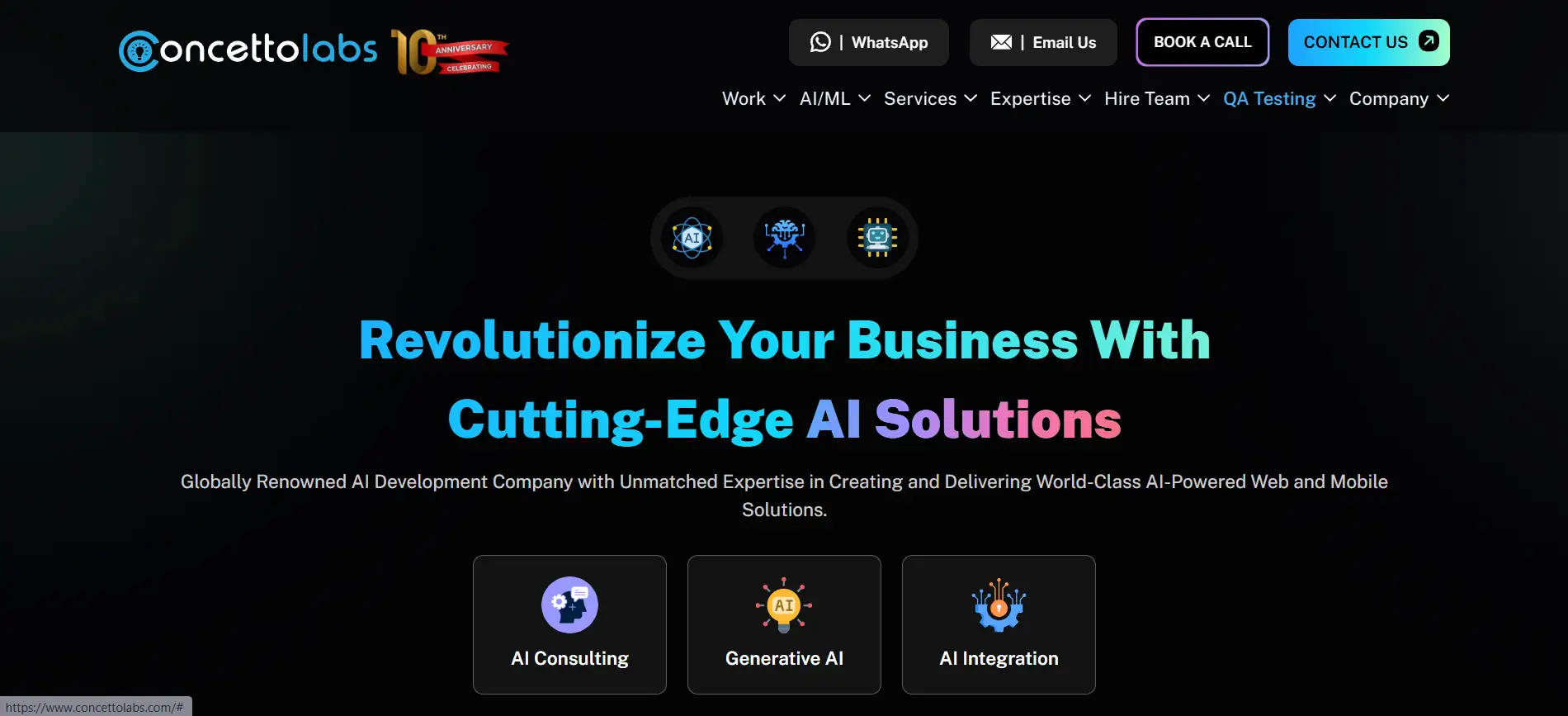
Corporate portal rebuild for an India-based engineering company: Sanity-driven content, a Next.js front end on Vercel, faster lead handoff and cleaner case studies.
- Year
- 2024
- Role
- Full-stack development
- Category
- Corporate portal rebuild
The challenge
The company had outgrown its old WordPress portal: a slow editor, case studies copied from spreadsheets and a lead form that dropped into an inbox nobody read.
The approach
A full rebuild on Next.js with Sanity as the content layer, deployed on Vercel with instant previews, with a new case-study and services layout and a lead pipeline that pushes requests into the sales tools without manual copying.
The outcome
A faster editorial workflow, clearer case studies and a sales team that receives structured requests in its existing system instead of spreadsheets.
Under the hood
- Field
- Engineering services · B2B
- Type
- Corporate portal rebuild with headless CMS
- Team
- full-stack · alongside the client's in-house copy team
01
The real problem
A services agency lives or dies on its portfolio page. If the case studies look generic, the sales pipeline stalls. The old site's editor experience was so painful that case studies went up months after the project shipped — by which point the engineer who built it had moved on. The brief was a faster publishing workflow for case studies, and a case-study layout that signals "we engineer real systems," not "we have a stock-photo template."
02
Who did what
Engineering ownership. The client supplied the copy and the brand direction; we owned the Sanity schema, the Next.js front end, the lead-pipeline wiring, and the Vercel deployment. The Sanity schema was designed so their non-technical writers can publish case studies without engineering involvement.
- Schema designer (Sanity)
- Modelled case studies, services, team, testimonials, and lead-form payloads in a way that scales as the agency adds verticals. Portable Text for rich bodies; structured references for technology stacks.
- Front-end engineer
- Next.js 14 App Router, ISR for content surfaces, full responsive design, accessibility baseline (WCAG AA on the major templates).
- Lead pipeline engineer
- Form submissions push into the agency's CRM via webhook + idempotency key; sales team sees structured payload (project type, budget, timeline) without manual entry.
- DevOps / deploy
- Vercel + Sanity preview integrations so editors see drafts live before publish. Custom domain, edge caching, daily Sanity content snapshots.
03
Architecture
01 — Edge
Edge tier
Vercel Edge
CDN + ISR
Global edge cache; revalidates on Sanity webhook
02 — App
Application tier
Next.js 14
App Router · RSC · ISR
Static-by-default with on-demand revalidation
Sanity Studio
Embedded · /studio route
Editor surface lives at the same domain as the public site
Form webhook
Edge function
Idempotent push to CRM; retries on failure
03 — Data
Data tier
Sanity Content Lake
Hosted CMS
Single source of truth; JSON export available
Daily snapshot
GitHub Actions · S3
Off-platform backup of all content + assets
04
Challenges
- 01
Editorial flow has to be 10× faster than the legacy WordPress flow or the team will not adopt it. Sanity Portable Text + custom blocks were the bet.
- 02
Case-study layout must communicate engineering depth without becoming a wall of text. Required a flexible block-based template with code-snippet support + diagram embeds.
- 03
Lead-form payload needs to route into the agency's existing CRM (not a fresh DB) with idempotency so a flaky webhook does not create duplicate leads.
- 04
Bilingual (English + Hindi) was deferred to v2 — the schema accommodates it, but v1 is English-only.
- 05
Preview-on-draft for editors: any change in Sanity must be visible on a draft URL before publish, with no engineering involvement.
05
Hard problems
Sanity schema that scales without becoming spaghetti
Modelled the 8 core content types (caseStudy, service, person, testimonial, post, page, technology, vertical) with strict references — not embedded duplicates. Adding a new vertical adds one document, not one schema migration.
Idempotent lead-pipeline webhook
Form POST generates a UUID client-side, server stores it before pushing to CRM, CRM webhook reply marks success. A retry on flaky network never creates two leads in the CRM.
Draft previews without exposing draft data
Sanity preview tokens scoped per editor session; draft URLs are signed and expire in 7 days. Public crawlers never see drafts.
06
Why these technologies
Next.js 14 + Vercel
- ISR + on-demand revalidation lets editors publish without rebuilding the whole site — change goes live in seconds.
- Edge runtime + RSC give the case-study pages near-static performance with full database personalisation when needed.
- Vercel preview deployments make every PR clickable without manual setup.
Sanity over Contentful/Strapi
- Portable Text is the cleanest rich-text format I have used — JSON-native, custom block types are first-class, editor experience is fast.
- Embedded Studio (same domain, no separate login) cuts editor friction massively.
- Pricing scales with API queries, not seats — fits a services agency where many people read content occasionally.
Idempotent webhooks over direct DB writes
- CRM is the source of truth for leads. Writing to a sidecar DB and syncing later creates two truths that drift.
- Idempotency key client-generated ensures retries are safe.
07
What I learned
- 01
Editorial speed determines content velocity.
- 02
Portable Text earns its place. JSON-native rich text gives you everything Markdown lacks (custom blocks, references, partial fragments) without locking you in.
- 03
Webhook idempotency is the cheapest insurance you can buy. Add it before you need it.
Stack
- Next.js
- Sanity
- Vercel
- Webhooks
Questions about Concetto Labs
Who built Concetto Labs?
Concetto Labs was delivered by Ali Haitham Yosef, founder of a software company in Damascus that carries his name. His role on the project: Full-stack development.
What is Concetto Labs?
Corporate portal rebuild for an India-based engineering company: Sanity-driven content, a Next.js front end on Vercel, faster lead handoff and cleaner case studies.
What technology does Concetto Labs use?
Next.js, Sanity, Vercel, Webhooks.
When was Concetto Labs built?
It was built during 2024.
Can you build a system like Concetto Labs for my business?
Yes. The company builds ERP systems, point-of-sale systems, mobile apps and websites for clients in Syria, Lebanon, Jordan, Iraq, Turkey and the Gulf states, working remotely. Contact: info@aliyosef.online.