

















ERP & accounting
We build ERP systems in Syria for your company: accounting, inventory and sales in one system, from a company in Damascus serving Syria and the neighbouring countries.
What the service covers
Custom accounting and cloud systems
Multi-tenant accounting, inventory, payroll, POS, and e-invoicing built around how your business actually works. Not a generic ERP forced into your shape.
- Multi-tenant by design (one codebase, many companies, full data isolation).
- Offline-first Flutter app with conflict-safe sync to a Laravel + MySQL backend.
- Tax engine modeled on Odoo for accuracy (inclusive, exclusive, ZATCA-ready).
- Self-hosted by default. You own the data, the database, and the deploy.
Topics
- Custom ERP software
- Cloud accounting system
- Inventory and sales management software
- ERP for small business
- Arabic ERP
Work that proves this service
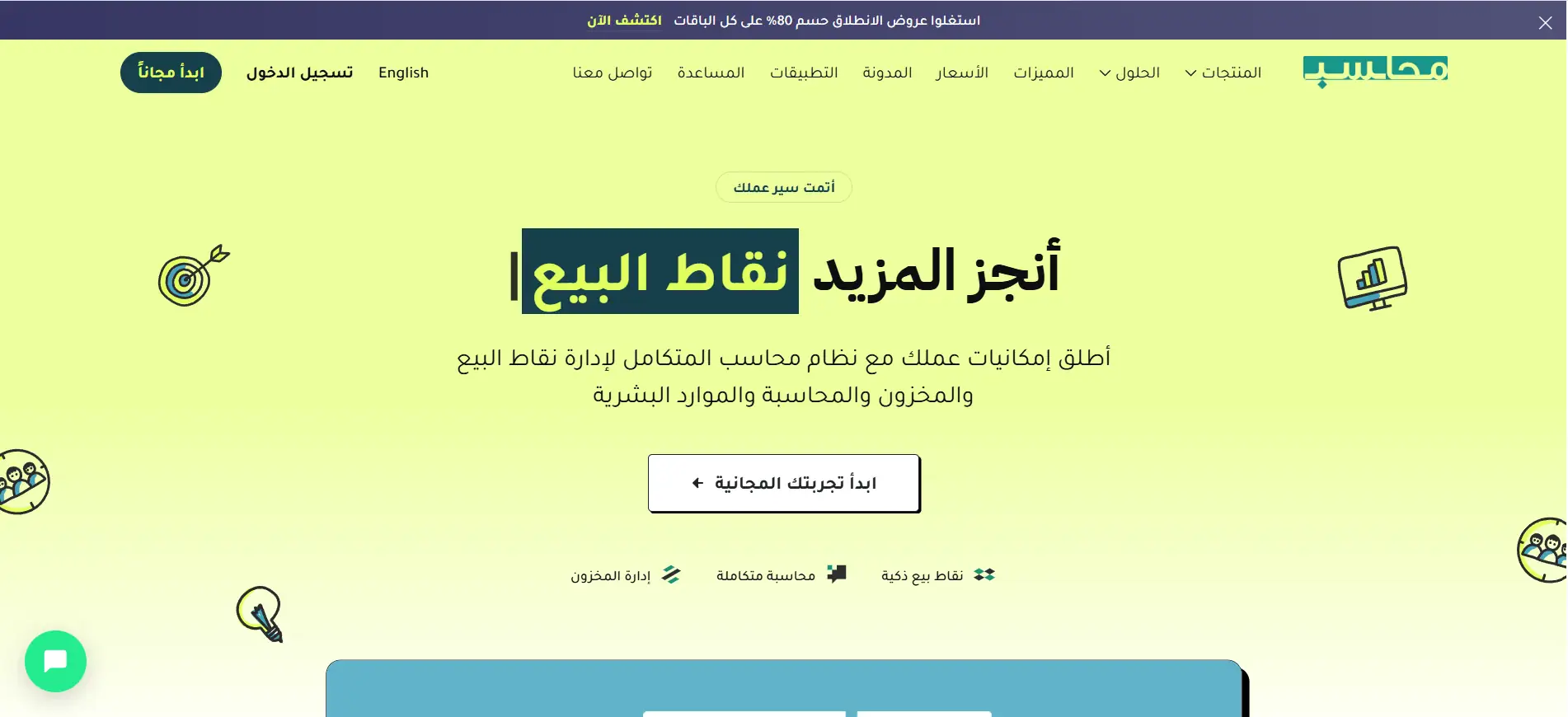
Mohaseb
Multi-tenant ERP
Cloud accounting and point-of-sale for many companies, working offline and serving more than 500 businesses, with Arabic and English interfaces.
Read the case studyStack
- Laravel
- Flutter
- MySQL
- Redis
- WebSockets
- Offline-first sync
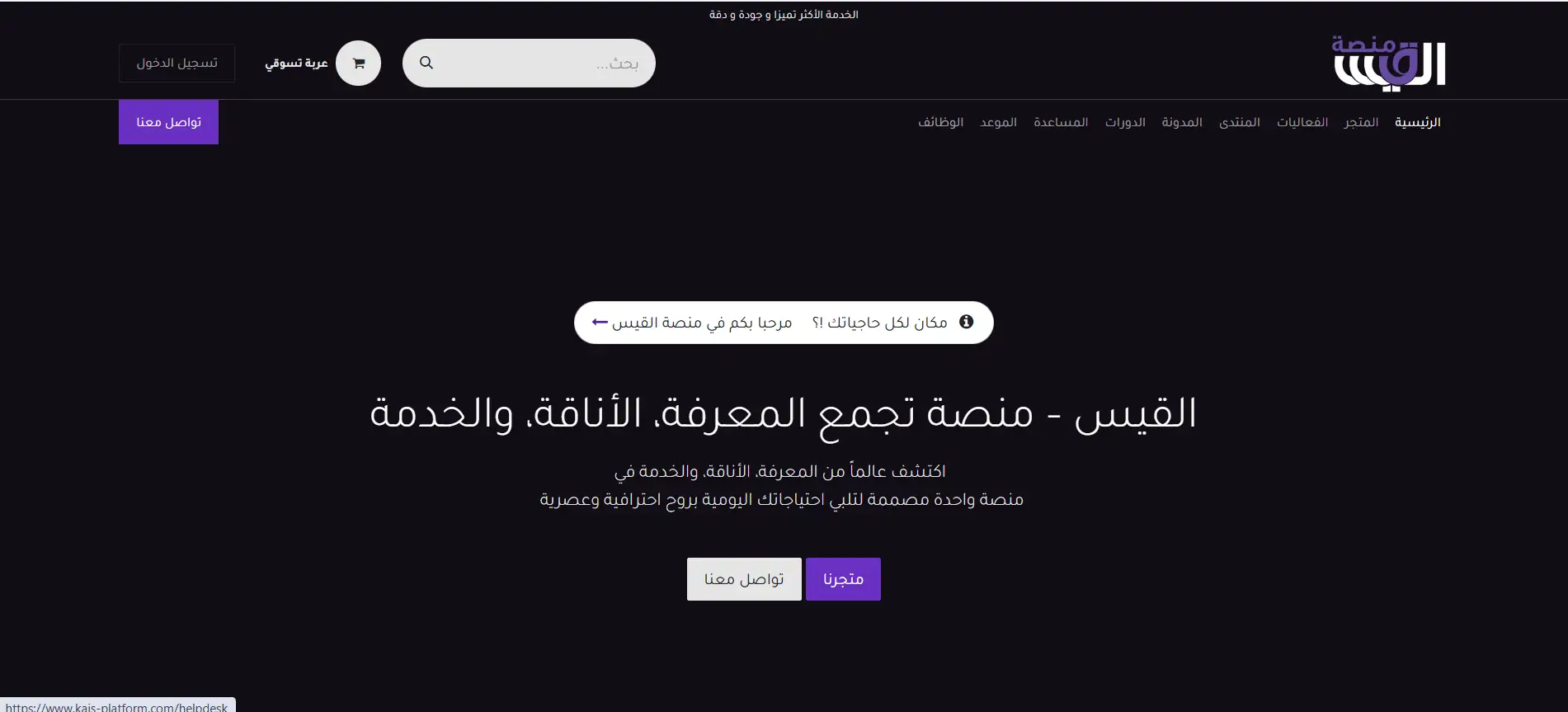
Kais Center
Odoo ERP, website and accounting training
An Odoo system, website and accounting training for an accounting training center: an Arabic chart of accounts and a site that reads cohort data straight from Odoo.
Read the case studyStack
- Odoo 18
- Python
- PostgreSQL
- Laravel
- XML-RPC
Common questions: ERP & accounting
What is an ERP system and does my business need one?
An ERP system brings a company’s operations, such as accounting, inventory and sales, into one system with one set of data. You need it when your work is spread over separate programs and spreadsheets and you cannot see the whole picture.
How do I choose an ERP for a small company?
Start with the work that takes most of your time, such as invoices and stock, and check that the system covers it in your language and currency. Then ask whether modules can be added later.
Custom ERP or off-the-shelf?
Off-the-shelf fits a standard process and is used as it comes. A custom system is built around how you work, so it suits activities a ready-made system does not cover.
What are the core ERP modules?
Accounting, inventory, sales and purchasing, and reports. Other modules are added by the company’s activity, such as payroll and point of sale.
Can ERP connect accounting, inventory and POS?
Yes. These parts are built to work on one set of data, so a sale is reflected in stock and accounts straight away.
A small process that respects both of our time.
No long pitch decks. Five steps, in this order.
01
Discovery call
We learn what you need and decide together whether this is a fit.
02
Written proposal
We write the scope, milestones and assumptions plainly, for you to read on your own time, not over a call.
03
Kickoff
We agree the contract and repository access, and start with a kickoff call.
04
Build and review
We build in stages, and you review what is done on a real staging environment and send us your notes.
05
Handover and support
Code, docs and runbooks. Your next engineer can take over.
Other services
- Read more
Point of sale
A cashier that works offline and syncs when the connection returns.
- Read more
Mobile apps
Android and iOS apps with a native feel.
- Read more
Websites, stores & hospitality
Websites and systems for stores and hospitality: orders, bookings and stock, tied to accounting from the first invoice.
- Read more
Automation & integrations
Process automation: e-invoicing (ZATCA), WhatsApp and external APIs.
- Read more
Audit & rescue
Reviewing existing systems and rescuing stalled projects.
Have a project of this kind?
Start your project